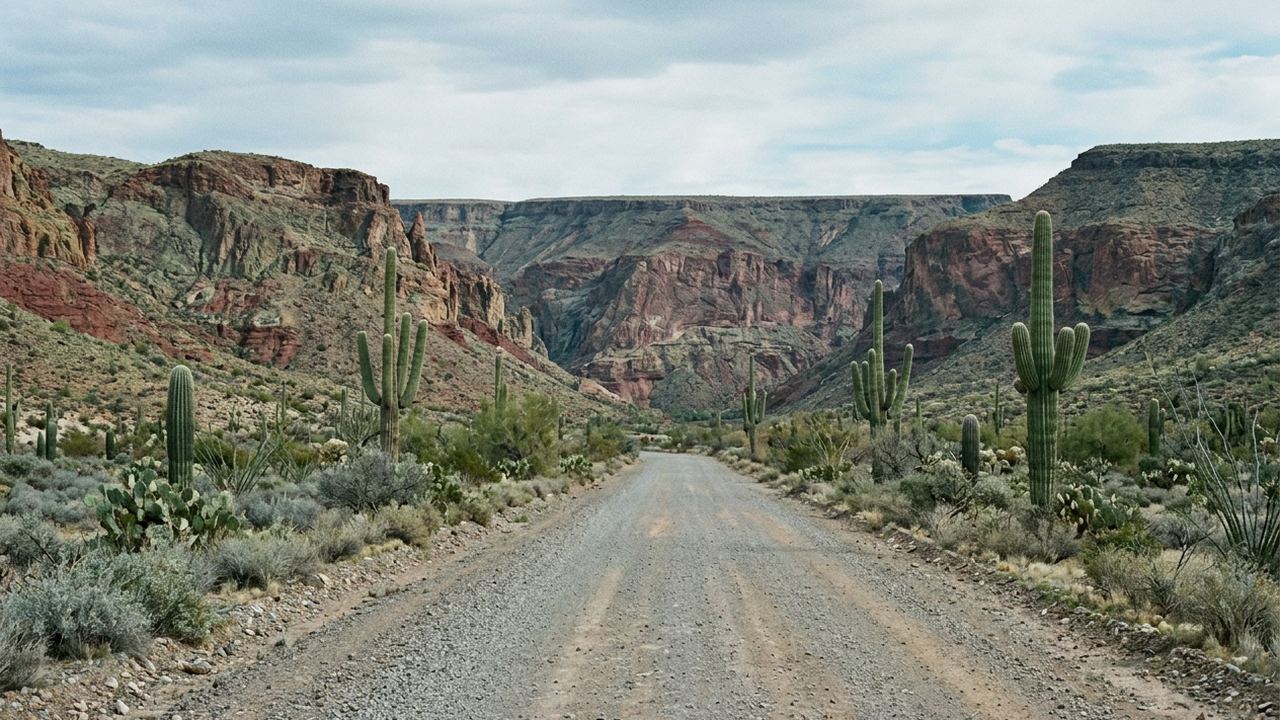
Most people arrive expecting a wine trip with some scenery attached, and leave describing it the other way round. The vineyards are real and they are extraordinary, planted between 5,500 and 10,200 feet where the sun is hard enough that the grapes grow thick skins and the wine comes out dense and slightly bitter around the edge. But you spend more waking hours looking at rock than at vines. The Quebrada de las Conchas, the canyon on the road down to Cafayate, is 30 miles of red and ochre sandstone cut into shapes that have names because people needed something to call them. The vineyards are an hour of that day. The canyon is four.
The photographs also leave out the surface. Roughly a third of the driving on this trip is on ripio, which is graded gravel, and graded is doing some work in that sentence. It is not dangerous and the vehicles are built for it, but it is loud, it is slow, and it means a 90 mile leg takes three and a half hours. The stretch of Ruta 40 south of Cachi is the one people mention afterward. Nobody photographs the corrugation.
And the towns are smaller than they look. Cachi has about 2,600 people. It has a plaza, a white church with a cactus wood ceiling, four or five places to eat and a museum of pre-Columbian material that is better than the town's size suggests. At eight in the evening it is quiet and dark. If that reads as a drawback rather than the point, this is the wrong week.
- The week in one sentence
- Nine nights: three in a colonial house in Salta city, two in a small hotel in Cafayate, two in a plain adobe inn in Cachi, two back in Salta, with a driver and a vehicle moving the party and the bags between them on gravel and paved road.
- Why this and not the next one
- Salta sits 15 flying hours from the middle of the United States with two connections, usually through a South American hub and then Buenos Aires. The ground is dry, rocky and high: the city is at 3,780 feet, Cachi at 7,900, the road between them crosses 11,000. Beds are small owner-run hotels and one adobe inn with thick walls and no elevator. The office sells the trip from March through November and stops for the summer rains. Nine nights, from $2,940 per person.
- Inside the figure
- Nine nights of double occupancy in four properties; breakfast every morning; a private vehicle with a Spanish and English speaking driver for eight days including the Cachi and Cafayate legs; three winery visits with tasting fees paid; entry to the Cachi archaeology museum and the Quilmes ruins; one lunch at a vineyard outside Cafayate; airport transfers at both ends; a written day by day sheet with driving times and altitudes; and a local telephone number for the operator in Salta.
- Outside it, and what that runs to
- International and domestic airfare, which has run $1,150 to $1,900 per person from Chicago or Dallas depending on month; dinners, which run $18 to $40 a head with wine in Salta and less in Cachi; the tourist train to the altiplano, which is a separate ticket at about $115 and needs booking weeks ahead; the driver gratuity, which the operator suggests at $15 to $25 a day; single occupancy, which adds $610 across the nine nights; laundry; altitude medication and any pharmacy visit; and travel insurance, which this office neither sells nor advises on.
- Reasons to book something else
- Do not reserve this if altitude is a question mark for you. The road to Cachi crosses the Piedra del Molino pass at 11,000 feet and stays above 7,500 for two full days, and there is no fast way down: the nearest hospital with a cardiac unit is four hours of switchbacks away. Two of the nine days involve five to seven hours in a vehicle on washboard gravel, which is punishing on a bad back or a recent hip. The walking is modest, about four miles a day, but at 9,000 feet four miles is not four miles at home.
What the ground does between 3,780 feet and 11,000
Salta city sits in a green valley and feels like nowhere else on the trip. It is humid enough for orange trees in the plaza. Within 40 miles in any direction that ends. The Calchaquí valleys run north to south between ranges that block the weather coming off the Amazon, so everything west of the city is dry, and the further up the valley you go the drier it gets. Cafayate has around 7 inches of rain in a normal year, nearly all of it between December and February. That is why the vineyards work: almost every day is clear, the vines are irrigated from snowmelt rather than rain, and the fruit ripens under a lot of ultraviolet.
The record on temperature is a wide daily swing rather than a hot or cold season. In Cafayate through the dry months the afternoons have generally sat between 68F and 78F and the same night has dropped to 38F or 40F. In Cachi, 2,000 feet higher, subtract about eight degrees from both ends. This is the single thing people pack wrong. A fleece and a windproof layer matter more than a heavy coat, and you will want both on and off across the same afternoon.
A typical day on this trip is not full. The vehicle leaves after breakfast, drives two to four hours with stops where stopping is worth it, arrives somewhere by early afternoon, and the rest of the day is yours. Four of the nine days have no driving at all. That is deliberate: at altitude, three consecutive full days flattens most people, and the operator has learned to leave the gaps in rather than defend them later.
Who tends to get on well with nine nights in the Calchaquí valleys
This suits people who are content with a small town in the evening and who read the drive itself as part of the trip rather than the cost of it. It suits people who like wine but do not need a tasting room with a view over a lake. It suits a couple or a pair of friends more than a group, because the vehicle seats four comfortably and six is tight on gravel.
It does not suit anyone who wants a beach day in the middle, a spa, or a night that goes past eleven outside Salta city. There is no coast within 700 miles. There is no nightlife in Cachi. The Argentine dinner hour is late, around nine, and in the small towns the kitchen often closes by ten thirty, which catches people out on the first night.
The same twenty-four trips are printed in five orders. This one sits in a different place in each, and none of the five positions is a judgement about it.
- Hours in the air
- 21 of 24 at 15 hours. The whole order
- Miles walked a day
- 3 of 24 at 4 miles. The whole order
- Per cent decided in advance
- 6 of 24 at 40 per cent. The whole order
- From, per person
- 18 of 24 at $2,940. The whole order
- Different beds
- 5 of 24 at 3 beds. The whole order
The season here, as the record has run
- Late February to mid March
- The rains are ending and the road south of Cachi has sometimes still been closed by a washout for a day or two. Green, dramatic, and the risk of losing a leg to a river crossing is real.
- Mid March to end of April
- The best combination in the record: harvest is finishing, afternoons around 75F, the canyon light is long, and everything is open. This is also when rooms in Cafayate go first, four to five months out.
- May and June
- Cold, clear and very quiet. Nights in Cachi have run to 28F and adobe rooms are heated by a stove, not a thermostat. Prices ease by roughly 10 percent and the roads are at their best.
- July
- Argentine winter school holidays. Salta city fills up, domestic airfares climb, and the small hotels raise rates for two weeks. Avoid unless the dates are fixed for you.
- August to late September
- Dry, windy, dusty. Vines are bare and the valleys are brown. The season low for travel and the least crowded, at the cost of looking at sticks in a field.
- October and November
- Vines leaf out, afternoons reach 80F in Cafayate, and the first storms arrive at the very end. Good light, good temperatures, some risk of an afternoon closure on the high pass.
- December to February
- The office does not sell this trip. Heavy rain, closed gravel, and the canyon road floods in a way that strands people for days.
The train, the tip everyone repeats, and the part that is genuinely expensive
The train that climbs to the altiplano is the thing people ask about first, and the honest answer is that it is a long, slow, single-purpose day. It leaves Salta early, climbs to a viaduct at around 13,800 feet, and returns after dark: figure 15 hours door to door, of which the part everyone comes for is about 40 minutes. It costs roughly $115 and it runs on a fixed schedule that varies by season and sells out well ahead. It is not in the price of this trip and the office does not book it, because the tickets go through a separate system that requires payment at the time of booking and this office takes no payment from travelers. What the operator in Salta will do is tell you the running days for your dates and hold the vehicle so you are not paying for a driver who is sitting still. Several people have skipped the train and driven to San Antonio de los Cobres instead, which reaches similar altitude in a third of the time and costs nothing extra on a day the vehicle is already yours.
The expensive part is the flying, and it is worth being blunt about it. Salta is 15 hours in the air from the middle of the country and almost always two connections, with an overnight leg and then a domestic hop from Buenos Aires that frequently requires changing airports in the city, which is a 90 minute transfer with traffic. Airfare has run $1,150 to $1,900 per person and it moves more than anything else in the budget. Anyone building the total should add the fare to the $2,940 and expect a real figure between $4,100 and $4,900 per person before dinners. This office prints the starting figure and not the total because we do not control the fare, and a number that includes a guess at it would be a worse number, not a better one. When you send dates, the written figure comes back priced against those dates, and it will say plainly which parts are firm and which are still estimates.